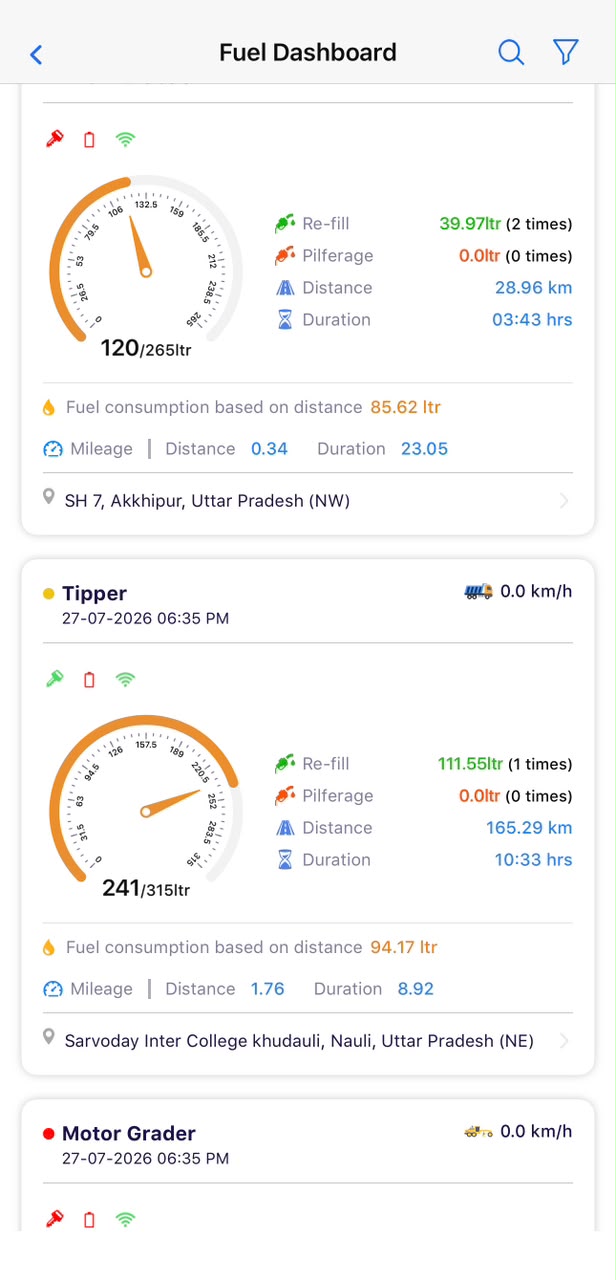
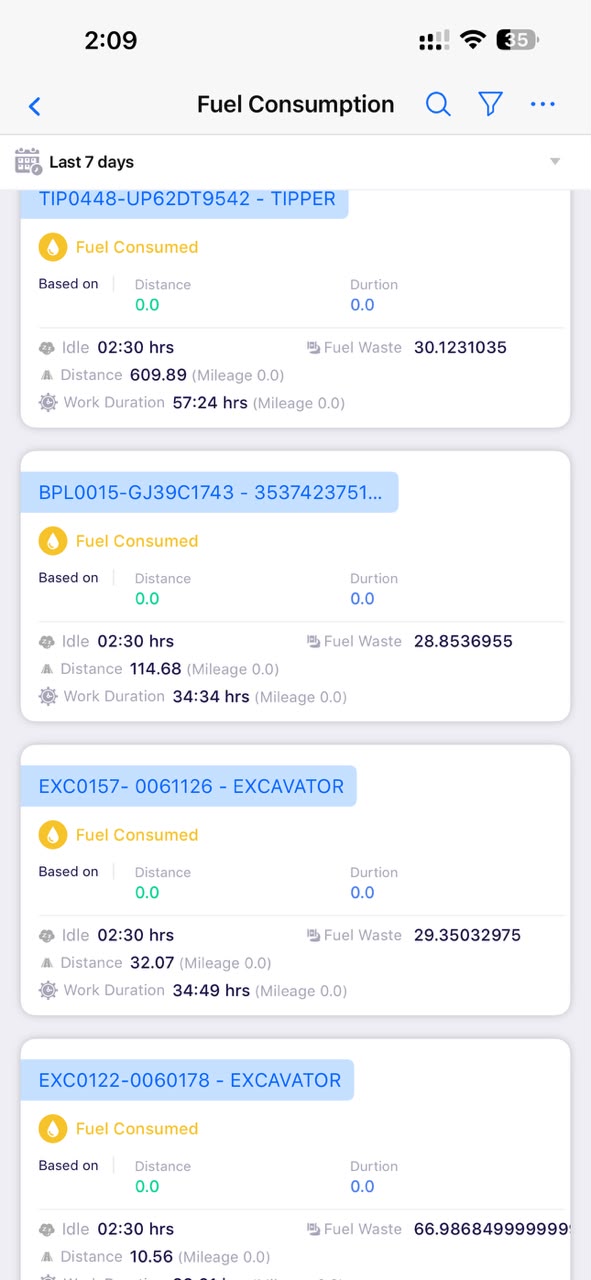
Fuel is one of the largest operating expenses for commercial vehicles, marine vessels, generators and heavy equipment. Without accurate monitoring, fuel theft, unauthorised refuelling and unexplained loss quietly inflate your costs. We provide professional fuel level monitoring that gives you complete visibility into every litre — real-time levels, intelligent alerts and detailed reporting.
Every fuel event matched to location, movement and operating status.
Talk to us
+234 901 054 4454
Call or message for a faster recommendation.
Coverage
Nigeria
Installation support matched to your location.
Monitoring access
Anywhere
Supported systems can be viewed remotely from anywhere in the world.
Best fit
Fuel Monitoring
We narrow down the right setup before you book.
How fuel level monitoring works
A high-precision fuel level sensor is professionally installed inside or on the fuel tank, depending on the application and tank design. The sensor continuously measures the level and sends readings to the tracking platform through the installed GPS device.
The system records fuel activity throughout the day, so managers can monitor levels remotely from a phone or computer. Every fuel event is matched with the vehicle's location, movement and operating status — which is what turns raw readings into an explanation of where fuel actually went.
Why GPS tracking matters here
Fuel monitoring is most effective combined with GPS tracking. Location data shows where a vehicle was when fuel was added or removed, which is precisely what separates an authorised refuelling from a suspicious loss.
With Top Car Tracker, fuel monitoring and GPS tracking run in one integrated system, so routes, stops and driver activity are reviewed alongside fuel events rather than in a separate tool.
Professional tank calibration
Accurate monitoring depends on calibration. During installation the tank is carefully calibrated so the platform can convert sensor readings into meaningful measurements for that specific tank shape and size.
Good calibration improves reporting accuracy and, just as importantly, minimises false alerts — which is what keeps the system trusted and actually used over the long term.
Options
Choose the right configuration
Capacitive Fuel Sensors
The preferred solution for most commercial applications, offering excellent accuracy and long-term reliability across a wide range of tank sizes, materials and shapes after proper calibration.
Highest accuracy after calibration
Proven long-term reliability
Suits most tank sizes and shapes
Ideal for
Trucks and trailers
Buses
Generators
Bulk storage tanks
Ultrasonic Fuel Sensors
A non-invasive option for selected tank types where internal installation is not preferred. Our technicians assess each installation and recommend the right sensor for the tank design and operating environment.
No internal tank entry required
Suited to selected tank types
Assessed case by case
Ideal for
Sealed tanks
Warranty-sensitive assets
Selected marine applications
Capabilities
What the system does
Monitoring and alerts
Real-time fuel level monitoring from anywhere
Fuel theft detection with immediate alerts
Alerts for sudden drops, low levels and unauthorised refuelling
Fuel anomaly notifications
GPS integration so fuel data sits alongside routes and driver activity
Records and reporting
Refuelling records with date, time and location
Fuel level before and after each refuelling
Estimated quantity added
Historical fuel events and consumption trends
Exportable reports for fleet management and auditing
Where fuel monitoring is used
The same sensor and platform combination adapts to very different assets — what changes is the sensor choice and the calibration.
Commercial fleets
Haulage, logistics, delivery, buses, construction fleets and transport operators needing accurate tracking across many vehicles.
Marine operations
Fishing boats, commercial vessels, workboats and passenger boats where fuel is a dominant running cost.
Generators
Diesel consumption for industrial generators at hospitals, offices, factories, telecom sites, hotels and schools that depend on backup power.
Fuel storage tanks
Stationary tank inventory management, with detection of unauthorised withdrawals.
Construction and heavy equipment
Excavators, loaders, bulldozers, cranes, tractors and other machinery on construction or industrial sites.
Operational benefits
Reduce theft and unauthorised usage
Unexplained losses stop being invisible, which changes behaviour as much as it catches incidents.
Improve driver accountability
Fuel events tied to location and time remove the ambiguity that makes disputes hard to settle.
Simplify fuel auditing
Recorded refuelling data makes reconciling fuel purchases against actual tank gains straightforward.
Increase profitability
Better consumption data supports maintenance and operational decisions that lower cost per kilometre.
Who this suits
Trucks, trailers, buses and vans
Commercial vehicles
Boats, fishing vessels and workboats
Industrial generators
Construction equipment
Agricultural machinery
Fuel storage tanks
Mining and heavy-duty machinery
How installation works
1Asset assessment to determine the best sensor type and installation method
2Professional installation that protects the integrity of your fuel system
3Tank calibration to improve measurement accuracy and reduce false alerts
4Platform configuration, alert customisation and testing before handover
FAQs
Fuel level monitoring questions
What is a fuel level monitoring system?
A fuel level monitoring system measures the amount of fuel inside a tank and reports it in real time. It helps businesses monitor consumption, detect theft, verify refuelling and improve operational efficiency.
How does fuel monitoring help prevent fuel theft?
The system continuously monitors fuel levels and detects unusual drops. When unexpected loss is identified, an alert is generated so operators can investigate immediately.
Can the system monitor refuelling?
Yes. Every refuelling event is automatically recorded, making it easier to verify fuel purchases and monitor usage across your fleet.
Is GPS tracking required?
Fuel monitoring delivers the greatest value when integrated with GPS tracking, because it allows fuel events to be matched with vehicle location, trips and driver activity.
What vehicles and assets can use fuel monitoring?
The system can be installed on commercial vehicles, trucks, buses, marine vessels, generators, heavy equipment, agricultural machinery and stationary fuel storage tanks.
How accurate is the system?
Accuracy depends on proper installation and calibration. Once professionally calibrated, the system provides highly reliable fuel level measurements for ongoing monitoring and reporting.
Can I monitor multiple vehicles?
Yes. Businesses can monitor individual assets or entire fleets from a centralised dashboard, making it easier to manage fuel usage across many vehicles.
Can I access the system remotely?
Yes. Fuel information, alerts and reports can be accessed securely through supported web and mobile platforms, so you can monitor your assets from virtually anywhere.
Related services
Combining these gives greater visibility into vehicle performance, driver activity, fuel consumption and overall operations from a single platform.
GPS vehicle tracking
Fleet management solutions
Dash camera systems
Driver behaviour monitoring
Vehicle immobilisation
Fleet compliance monitoring
Vehicle recovery solutions
Related Services
Explore the next protection layer
Fleet Management
Manage Your Entire Fleet from One Powerful Platform
Live tracking, geofencing, driver reports and role-based access for trucks, vans, cars and mixed fleets on one dashboard.
Whether you operate trucks, commercial vessels, generators or heavy equipment, our solution gives you real-time visibility into every litre across your assets.
We install at your location, calibrate each tank for accurate readings and integrate everything into one dashboard alongside your GPS tracking. You get instant alerts for suspicious activity, complete refuelling records, and the insight needed to cut waste.
We support businesses of every size, from a single asset to a large fleet. Contact us for a quotation based on your operational requirements.